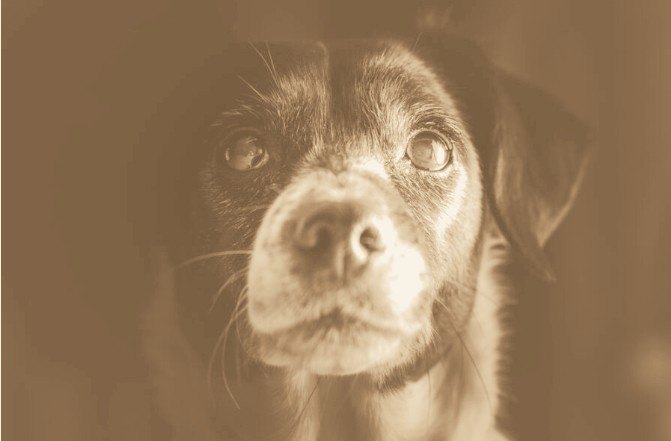
As dogs grow older, some develop changes in the brain much like dementia in people. Vets call it canine cognitive dysfunction, and it’s often mistaken for “just getting old”. Recognising it early means you can make your dog’s days calmer and more comfortable — and plan ahead with less guesswork.
What is dog dementia?
It’s a gradual decline in memory, thinking and awareness, seen in senior dogs. It can’t be cured, and it usually progresses slowly — but many of the signs can be eased, and there’s a lot you can do to keep your dog content.
What’s happening in the brain?
In dogs with dementia, abnormal proteins — including amyloid, the same protein involved in Alzheimer’s disease in people — gradually build up in the brain, along with inflammation and a loss of connections between brain cells. That’s why the changes are slow and progressive, and why other health problems that affect the brain, such as liver or kidney disease, can make the signs worse.
Signs of dementia in dogs
Vets often use a checklist called DISHAA, developed by veterinary behaviourists (Landsberg et al., 2012), which groups the changes into six areas. Here’s how families usually describe them to us:
- Disorientation — “She stands at the hinge side of the door waiting to go out”, or “he gets wedged behind the couch and can’t work out how to back out”.
- Interactions — a dog who used to meet you at the door now barely looks up, or one who was independent suddenly won’t leave your side.
- Sleep–wake changes — dozing through the day, then wandering, panting or barking in the small hours.
- House soiling — accidents inside from a dog that has been reliable for years, sometimes right after coming in from the yard.
- Activity — aimless pacing or circling the same route, or losing interest in walks, toys and the things they used to love.
- Anxiety — new worries about being left alone, about noises or visitors, or restlessness that’s hard to settle.
One or two of these on their own can have many causes. The more you notice together — and the more slowly they’ve crept in — the more likely dementia becomes.
What raises the risk of dementia?
Age is the biggest factor — the changes in the brain build up slowly over years. But a dog’s overall health seems to influence how early the signs appear and how much they affect daily life.
- Age — the chance of dementia goes up with every year after middle age.
- A long life — small breeds often live into their mid-to-late teens, the ages when dementia becomes most common.
- Inactivity — dogs that aren’t active are more likely to show signs, although it isn’t yet clear how much is cause and how much is effect.
- Other illnesses — liver, kidney, heart and hormonal disease, high blood pressure and pain can all add to the picture (see conditions that mimic or worsen dementia).
What researchers are still exploring
The ideas below are promising, but not yet proven in dogs. They’re good reasons to look after your dog’s teeth, gut and diet — not reasons to blame yourself.
- Gum disease — in people, scientists are investigating whether bacteria and inflammation from gum disease can affect the brain. Whether the same happens in dogs isn’t yet known — but dental disease is painful, and worth treating regardless.
- Long-term gut disease — ongoing inflammation of the gut can reduce how well some nutrients are absorbed, including vitamin B12 and folate. Researchers are looking at the links between gut health, these nutrients and the ageing brain.
- Diet — diets formulated for the ageing brain, enriched with antioxidants, omega-3 fatty acids or medium-chain triglycerides (MCTs), have shown benefits in trials in older dogs (Milgram et al., 2005; Pan et al., 2010). Researchers are also studying how heavy processing affects delicate nutrients such as omega-3s and B vitamins. Talk to your vet before changing your dog’s diet, especially if they have other health conditions.
Is it dementia, or something else?
There’s no single test for dementia. Vets reach the diagnosis by ruling out other causes first — and many of those causes are treatable. Common look-alikes include:
| What you notice | It could also be |
|---|---|
| Restless or awake at night | Arthritis pain, needing to toilet more often, hunger, failing eyesight |
| Accidents in the house | A urinary infection, kidney disease, diabetes, or pain on the way outside |
| Clingy, follows you, upset when you leave | Anxiety — often linked to a particular trigger |
| Ignores you, or snaps when woken | Hearing loss |
| Confused mainly at dusk or in dim light | Failing eyesight |
| Licking one spot, or pacing | Pain, anxiety or boredom |
| Grumpy, avoids play or walks | Pain, such as arthritis |
Older dogs can have dementia and another condition at the same time, so a full check-up is worthwhile even if you’re fairly sure.
- the changes came on over days rather than months
- your dog has a seizure, circles to one side, or presses their head against walls
- they develop a head tilt, wobbliness or sudden blindness
- there’s vomiting, weight loss, or they’re drinking much more than usual
These point to causes other than dementia that need prompt attention. For an emergency, contact your nearest emergency vet, such as AES Underwood (07 3423 1888).
Conditions that mimic or worsen dementia
Older dogs rarely have just one thing going on. Many common conditions of ageing can look like dementia, and others can sit alongside it and make it worse. Finding and treating them can make a real difference — sometimes a dog who seemed “lost” becomes noticeably brighter.
Arthritis, back pain and sore teeth are the most common culprits. A dog in pain may pace at night, struggle to settle, snap when touched, lick one joint, or lose interest in walks — all easily mistaken for confusion.
A dog who can’t see well may bump into things, hesitate on steps or get muddled at dusk. A dog who can’t hear may ignore their name or startle and grumble when woken.
When the liver can’t clear toxins properly, they can affect the brain, causing dullness, confusion, pacing or pressing the head against walls — sometimes worse after meals. Some long-term medications can strain the liver, which is one reason regular blood tests matter.
Very common in older pets. Drinking and urinating more often leads to accidents indoors, and later stages bring nausea, low energy and a dull, flat manner.
Often linked to kidney, heart or hormonal disease. It can cause sudden confusion, sudden blindness or circling. Signs that appear suddenly and then partly improve point towards a stroke rather than dementia.
An underactive thyroid can make a dog slow, flat and uninterested. Cushing’s disease brings panting, restlessness, a big thirst and accidents. Diabetes increases thirst and urination. In older cats, an overactive thyroid often causes night-time yowling and restlessness.
When the heart isn’t pumping well, less oxygen reaches the brain. Dogs may tire easily, seem vague or withdrawn, and sleep poorly.
Brain tumours and inflammation of the brain can cause behaviour change before anything else — but seizures, circling to one side, head pressing or wobbliness usually follow, and these are not typical of dementia.
What your vet will check
- A full examination — including a pain check, eyes and ears, and a neurological assessment.
- Blood and urine tests — for liver and kidney function, thyroid and other hormones, and blood sugar.
- Blood pressure — ideally measured when your dog is calm.
- A trial of pain relief — if night-time pacing and restlessness settle, pain was playing a big part. Pain and dementia often occur together, so improvement doesn’t rule dementia out.
- Sometimes imaging — such as an MRI scan, if brain disease is suspected.
Only once these are explored and treated can the remaining signs be put down to dementia. Bringing a list of the changes you’ve noticed — and when they started — is one of the most useful things you can do.
How to help a dog with dementia at home
- Make every day look the same — breakfast, the walk, dinner and bedtime at roughly the same times. Predictability is reassuring when memory is slipping.
- Leave the furniture where it is — and add a night light in the hallway, a gate across the back steps, and a barrier around the pool.
- Little and often — two or three short sniff-walks instead of one long one, a snuffle mat or lick mat, and easy tricks they already know.
- Set up for quieter nights — a last toilet trip just before bed, a soft bed away from the busiest part of the house, and something familiar that smells of you.
- Talk to your vet about treatment — some diets, supplements and medications can ease the signs in some dogs. What suits yours depends on their other health conditions.
Looking after the whole dog
Regular senior check-ups, good dental care, managing long-term illnesses, and keeping your dog gently active and engaged all support their overall health as they age — and help your vet spot problems that can mimic or worsen dementia.
When palliative care can help
When dementia starts to affect your dog’s comfort — or your family’s — through restless nights, anxiety, accidents, or other conditions alongside it, palliative care at home can help. We manage symptoms, keep your dog comfortable in familiar surroundings, and give you a plan for the weeks ahead.
Keeping track over time
Because dementia changes slowly, day-to-day differences are easy to miss. The free NAQOLS app includes a question on thinking and awareness alongside comfort, eating, mood and movement, so you can see the trend rather than guess.
When is it time to say goodbye?
There’s no single answer. Families often notice more bad days than good, distress that can’t be settled, or a dog who no longer seems to know where they are or who they’re with. When that time comes, we can help you decide — and provide a peaceful goodbye at home.
Common questions
Can dogs get dementia?
Yes. Vets call it canine cognitive dysfunction. It’s a gradual decline in memory, thinking and awareness, similar in many ways to Alzheimer’s disease in people.
At what age does dog dementia start?
It’s a condition of senior dogs. It’s very unlikely to show in dogs under six, and becomes more common with each year of age after that.
Is dog dementia painful?
Dementia itself isn’t thought to be painful, but the confusion and anxiety can be distressing. Older dogs often have painful conditions such as arthritis at the same time, which can make the signs worse — so comfort care matters.
Can dog dementia be treated?
There’s no cure, but a predictable routine, gentle activity and mental engagement, and diets, supplements or medication recommended by your vet can ease the signs and help some dogs stay settled for longer.
Can cats get dementia too?
Yes. Older cats can develop similar changes, often with night-time crying, restlessness and confusion. The same advice applies: have them checked by a vet, because many look-alike conditions are treatable.
References
- Brisset A, Taylor TL, Blanchard T, Fernandez EJ, Hazel SJ (2025). Attitudes of Australian veterinary professionals to diagnosing and managing canine cognitive dysfunction. Veterinary Sciences, 12(3), 272.
- Denenberg S, Liebel F-X, Rose J (2017). Behavioural and medical differentials of cognitive decline and dementia in dogs and cats. In Landsberg G, Maďari A, Žilka N (eds), Canine and Feline Dementia. Springer, 13–58.
- Landsberg GM, Nichol J, Araujo JA (2012). Cognitive dysfunction syndrome: a disease of canine and feline brain aging. Veterinary Clinics of North America: Small Animal Practice, 42(4), 749–768.
- Milgram NW, Head E, Zicker SC, et al. (2005). Learning ability in aged beagle dogs is preserved by behavioral enrichment and dietary fortification: a two-year longitudinal study. Neurobiology of Aging, 26(1), 77–90.
- Neilson JC, Hart BL, Cliff KD, Ruehl WW (2001). Prevalence of behavioral changes associated with age-related cognitive impairment in dogs. Journal of the American Veterinary Medical Association, 218(11), 1787–1791.
- Pan Y, Larson B, Araujo JA, et al. (2010). Dietary supplementation with medium-chain TAG has long-lasting cognition-enhancing effects in aged dogs. British Journal of Nutrition, 103(12), 1746–1754.
- Salvin HE, McGreevy PD, Sachdev PS, Valenzuela MJ (2010). Under diagnosis of canine cognitive dysfunction: a cross-sectional survey of older companion dogs. The Veterinary Journal, 184(3), 277–281.
- Yarborough S, Fitzpatrick A, Schwartz SM, Dog Aging Project Consortium (2022). Evaluation of cognitive function in the Dog Aging Project: associations with baseline canine characteristics. Scientific Reports, 12.
Worried about your older dog?
Book a palliative care visit at home, or get in touch if you’d like to talk things through first.